
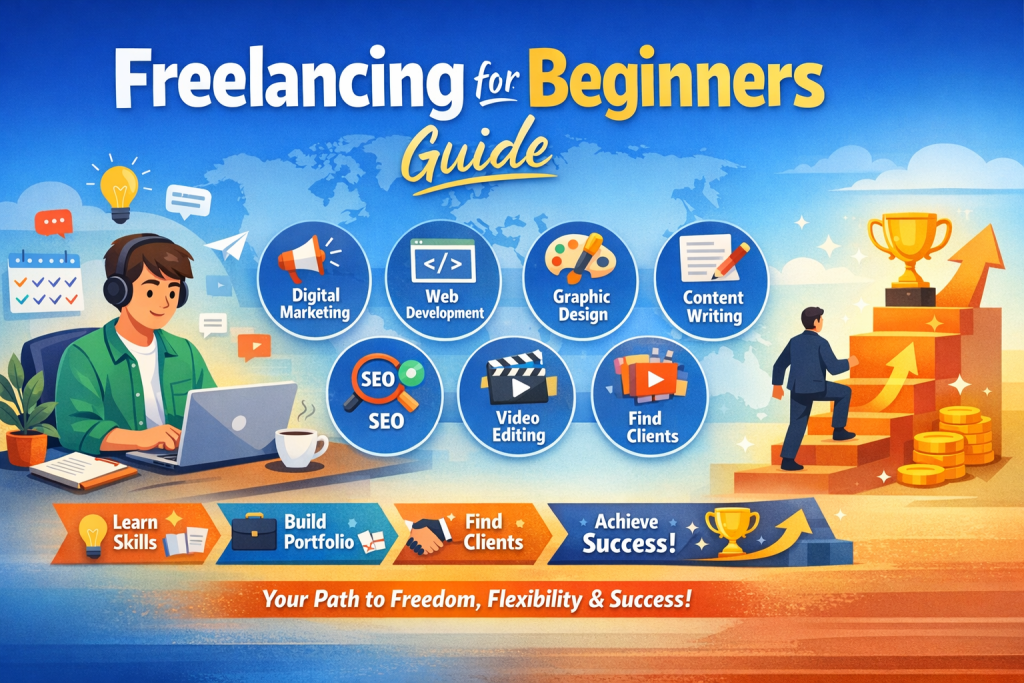
Freelancing for Beginners:- A Step-by-Step Guide
Freelancing for beginners is no longer just a side hustle. Today, millions around the world students, job holders, and business owners—are choosing freelancing as a career for freedom, flexibility, and income growth.
Many beginners misunderstand freelancing. They think having one skill is enough and clients will automatically come. In reality, freelancing is like running your own small business, requiring planning, skill, and strategy.
In this blog, you will learn freelancing for beginners step by step, using simple words, with a focus on long-term growth, SEO, and practical results.

1. Learn a High-Demand Skill
Every successful freelancer starts with one strong skill. Without a skill, freelancing is impossible.
Popular freelancing skills include:
-
Digital Marketing
-
Web Development
-
Graphic Design
-
Content Writing
-
SEO (Search Engine Optimization)
-
Video Editing
-
Social Media Management
-
Data Analysis
Tip: Focus on mastering one skill deeply. Clients prefer specialists, not people who claim to do everything.
Internal link suggestion: Link to your blog post or service page about your digital marketing services for beginners.
2. Practice Before Seeking Clients
Many freelancers fail because they rush to find clients without practice. Practice builds confidence, speed, and quality.
Ways to practice:
-
Create sample projects
-
Build demo websites or designs
-
Write sample articles
-
Run test ad campaigns
-
Solve real-world problems
Tip: Practicing first helps you meet real client expectations and reduces mistakes later.
Outbound link suggestion: Add a link to resources like Fiverr Learn or Upwork Academy.
3. Build a Strong Portfolio
Your portfolio proves your skills. Clients trust work they can see, not just words.
Portfolio should include:
-
Real or sample projects
-
Clear explanation of the problem
-
Your solution and process
-
Tools used
-
Final results
Tip: Beginners can create portfolios using Google Drive, Notion, or a personal website.
Internal link suggestion: Link to your portfolio page if you have one on your site.
4. Create Professional Profiles on Freelance Platforms
Freelancing platforms help beginners get their first clients.
Popular platforms:
-
Fiverr
-
Upwork
-
Freelancer
-
PeoplePerHour
Profile tips:
-
Clear and honest
-
Keyword-optimized (include your keyphrase “freelancing for beginners”)
-
Client-focused and simple
-
Avoid fake claims
Tip: Explain how you solve client problems, not just your own story.
5. Write Smart Proposals and Gigs
Proposals decide whether a client contacts you or not.
Good proposal includes:
-
Understanding the client’s problem
-
Explaining your solution
-
Using simple, friendly language
-
Avoiding copy-paste templates
Tip: Clients want solutions, not long introductions.
Internal link suggestion: Link to your service page for “Website Design for Beginners in Nepal” or “Facebook Ads Services for Beginners.”
6. Communicate Clearly With Clients
Clear communication builds trust and long-term relationships.
Tips:
-
Reply on time
-
Ask clear questions
-
Explain your work simply
-
Be polite and professional
Tip: Strong communication often matters more than technical skills.
7. Manage Time and Deadlines Properly
Freelancers work independently, so time management is critical.
Benefits of good time management:
-
Meet deadlines
-
Handle multiple clients
-
Reduce stress
-
Increase income
Tip: Use daily task lists and fixed work hours to stay consistent.
8. Deliver High-Quality Work Every Time
Quality is the foundation of freelancing success.
High-quality work includes:
-
Following client requirements
-
Checking for errors
-
Delivering on time
-
Maintaining professional standards
Results: Positive reviews, repeat clients, and higher-paying projects.
9. Handle Feedback and Revisions Professionally
Revisions are normal. Successful freelancers see feedback as growth.
Tips:
-
Stay calm
-
Listen carefully
-
Make improvements
-
Explain changes clearly
Tip: A satisfied client often becomes a long-term client.
10. Understand Payments and Protect Yourself
Understand payment systems to avoid problems.
Payment methods:
eSewa,
Khalti,
Bank transfer
Tips:
-
Follow platform rules
-
Avoid working without protection
-
Be alert for scams
Secure payments build confidence and peace of mind.
11. Promote Yourself Outside Freelance Platforms
Relying only on platforms limits growth. Build a personal brand.
Ways to promote:
-
Share helpful content on LinkedIn
-
Post knowledge on Facebook
-
Create a simple website
-
Write blogs related to your skill
Tip: Promoting yourself attracts direct clients and improves income stability.
Internal link suggestion: Link to your homepage or blog page for SEO benefits.
12. Keep Learning and Updating Skills
The online market changes fast. Tools, trends, and client needs evolve constantly.
Tips:
-
Learn new tools
-
Follow industry trends
-
Improve existing skills
Continuous learning keeps you competitive and relevant.
13. Develop Discipline and Patience
Freelancing success takes time.
Challenges in the beginning:
-
Rejections
-
Low-paying projects
-
Slow growth
Tip: Consistency, patience, and discipline are keys to long-term success.
14. Think Like a Business Owner
A freelancer is not an employee—they are a business owner.
Business mindset includes:
-
Setting prices confidently
-
Choosing the right clients
-
Creating systems
-
Planning long-term growth
Tip: Treat freelancing like a real business to succeed.
Conclusion
Freelancing for beginners is a real career with freedom, flexibility, and growth opportunities. Skills, communication, quality, and discipline matter most.
Focus on real value, build client trust, and improve consistently. Freelancing can give not just income but a stable, respected career.